
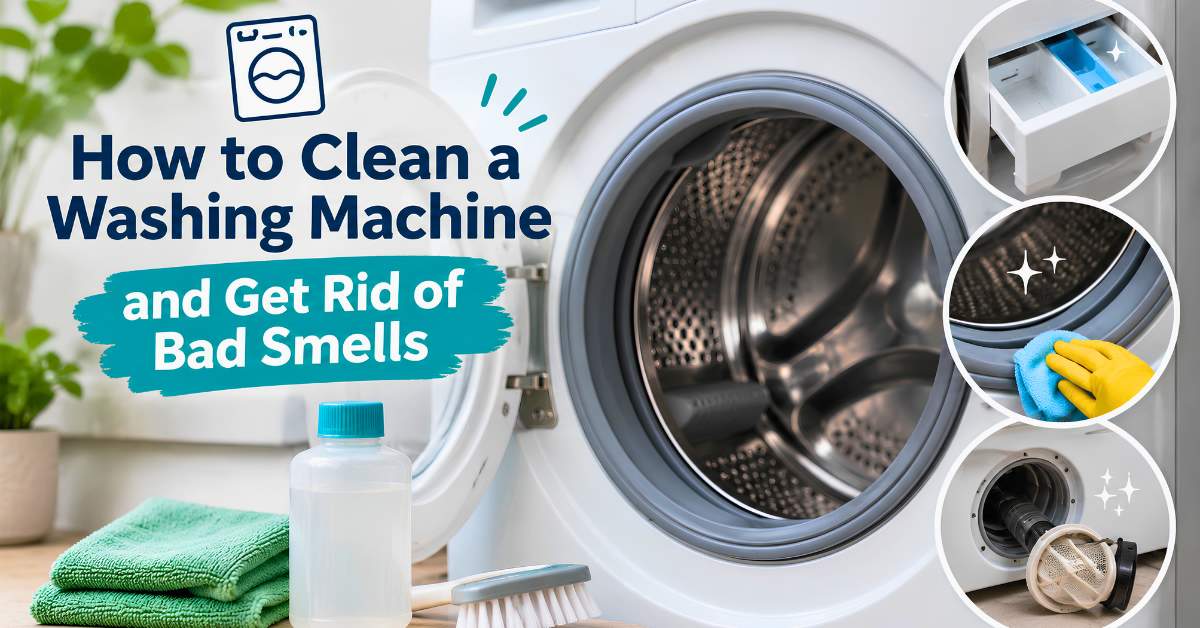
Your washing machine cleans your clothes, but how often do you clean the machine itself? Over time, detergent residue, fabric conditioner, lint and moisture can build up inside its components, creating unpleasant smells that may transfer to freshly washed laundry.
A musty smell when you open the door, a sour odour coming from the drum or clothes that never seem to smell completely fresh can all indicate that your washing machine needs attention.
Regular cleaning helps remove residue, keeps the machine fresh and supports its everyday performance. In this guide, we’ll explain how to clean each part of your washing machine, tackle persistent odours and prevent unpleasant smells from returning.
Why Does Your Washing Machine Smell Bad?
Washing machines are regularly exposed to water, detergent, fabric conditioner, dirt and body oils. Although these are removed during normal washing, some residue can remain in areas that are not thoroughly rinsed.
Several factors can contribute to unpleasant smells:
- Detergent and fabric conditioner residue – Using too much detergent or fabric conditioner can leave deposits inside the drum, drawer and pipes.
- Moisture trapped inside the machine – Closing the door immediately after a wash can prevent the drum and rubber seal from drying properly.
- Mould and mildew – Damp areas around the door seal and detergent drawer can become a suitable environment for mould growth.
- A dirty drain filter – Hair, lint, small objects and other debris can accumulate in the filter and contribute to unpleasant odours.
- Low-temperature washing – Frequently washing at low temperatures may allow detergent and dirt residue to accumulate, particularly if the machine is not maintained regularly.
- Wet laundry left inside – Clothes left in the drum for several hours after a wash can develop a musty smell.
Identifying the source of the odour is important because cleaning the drum alone may not solve the problem. The detergent drawer, rubber seal and filter also need attention.
What Do You Need to Clean a Washing Machine?
You don’t need many specialist products to clean the accessible parts of your washing machine. Gather the following supplies before you start:
- Microfibre cloths
- An old, soft toothbrush
- Warm water
- Mild washing-up liquid
- A suitable washing machine cleaning product
- A small bowl or shallow container
- An old towel
If you live in an area with hard water, you may also need a washing machine descaler. Choose a product suitable for your appliance and follow the manufacturer’s instructions.
Important: Always check your washing machine manual before using cleaning products. Some manufacturers advise against vinegar, bleach or other household cleaning substances because they may damage rubber components or internal parts. Never mix cleaning products, particularly bleach with vinegar or acidic cleaners.
How to Clean a Washing Machine Step by Step
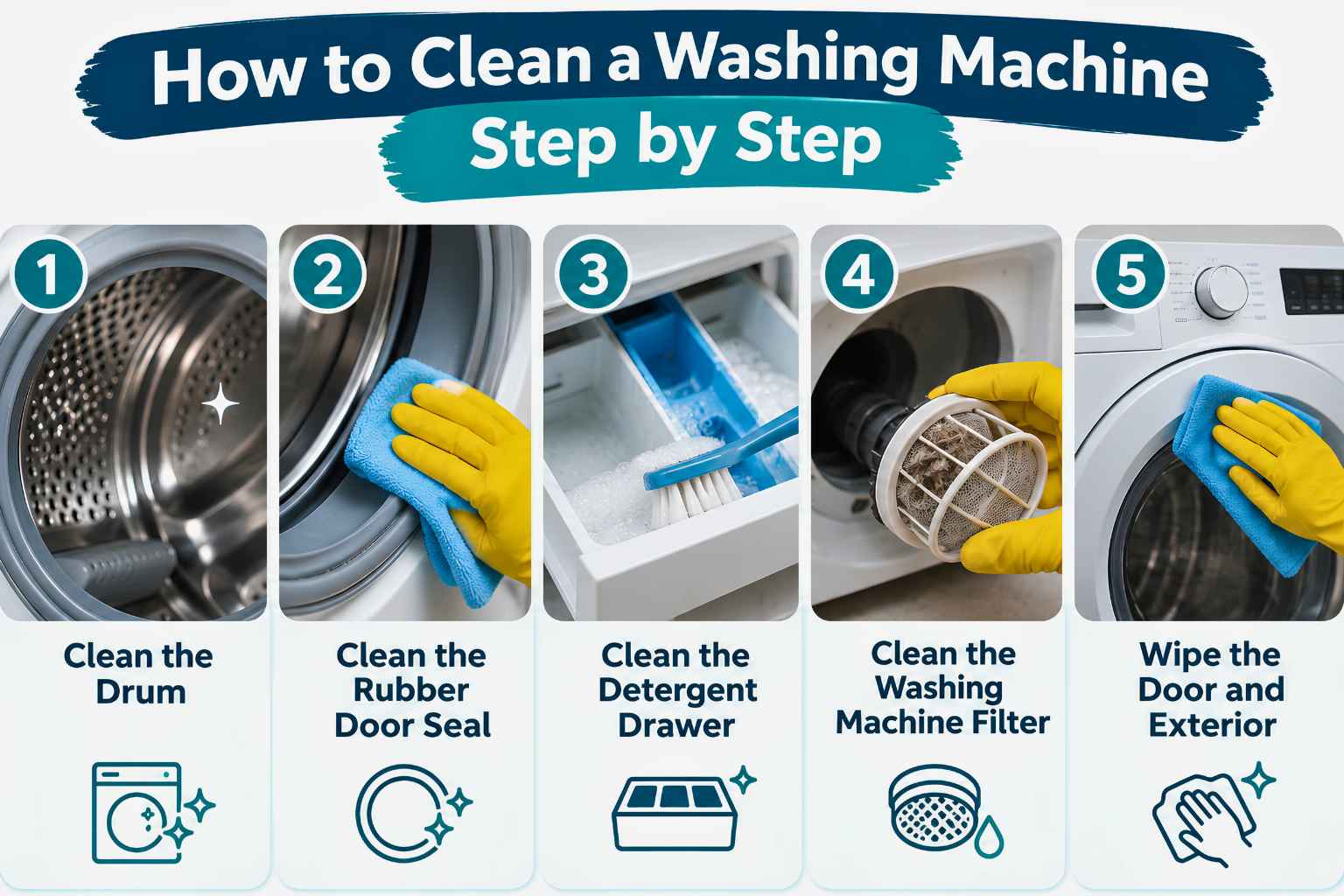
For a thorough clean, work through the main components rather than concentrating only on the drum. The following steps cover the areas where detergent residue, moisture and dirt are most likely to accumulate.
1. Clean the Washing Machine Drum
The drum comes into contact with dirty laundry, detergent and water during every wash. Although it is rinsed regularly, residue can gradually build up.
Here’s how to clean it:
- Remove all laundry from the machine.
- Check the manufacturer’s instructions for the recommended cleaning method.
- Add a washing machine cleaning product if required, following the dosage and instructions on its packaging.
- Run the dedicated drum-cleaning cycle, if your machine has one. Otherwise, use the cycle recommended by the manufacturer.
- Once the cycle has finished, wipe the inside of the drum with a clean microfibre cloth.
- Leave the door open to allow the interior to dry.
A maintenance wash can help remove detergent deposits and other residue that ordinary laundry cycles may leave behind. However, it is important to use the correct programme and cleaning product for your appliance.
2. Clean the Rubber Door Seal
The rubber seal around the washing machine door is one of the most common places for dirt, moisture and mould to collect. Its folds can trap small objects, hair, lint and water after each wash.
To clean it properly:
- Open the washing machine door and gently pull back the folds of the rubber seal.
- Remove any visible debris, such as hair, lint or small objects.
- Wipe the rubber with a damp microfibre cloth and a mild cleaning solution suitable for the material.
- Use a soft toothbrush to reach areas that are difficult to clean with a cloth.
- Wipe away any remaining cleaning solution with a clean, damp cloth.
- Dry the seal thoroughly, including the folds.
- Pay particular attention to the bottom of the seal, where water and debris often collect.
If you notice black spots or visible mould, clean the affected area using a product suitable for washing machine rubber seals. Follow its instructions and avoid abrasive brushes or harsh chemicals that could damage the material.
3. Remove and Clean the Detergent Drawer
Detergent and fabric conditioner can leave sticky deposits inside the drawer, particularly around the compartments and dispensing openings. These deposits can attract dirt and contribute to unpleasant smells.
Follow these steps:
- Remove the detergent drawer according to the manufacturer’s instructions.
- Separate any removable compartments or inserts.
- Soak the drawer in warm water for a few minutes to loosen dried detergent.
- Use an old toothbrush to remove residue from corners and narrow sections.
- Wipe the compartment inside the washing machine, paying attention to the top and sides.
- Rinse the drawer thoroughly and allow it to dry before putting it back.
Don’t forget to clean the area where the drawer sits. Even if the drawer looks clean, detergent residue can remain inside the compartment and around the water outlets.
4. Clean the Washing Machine Filter
The drain pump filter catches lint, hair, small objects and other debris that could otherwise interfere with drainage. If it becomes clogged, it may contribute to unpleasant smells and drainage problems.
The filter is usually located behind a small access panel at the bottom of the washing machine, although its position varies between models.
Before cleaning it, switch off and unplug the appliance. Check the manufacturer’s instructions, as some machines require a specific procedure.
- Place an old towel and a shallow container underneath the access panel.
- Open the panel carefully.
- If your machine has an emergency drain hose, use it according to the manual to release trapped water.
- Slowly loosen the filter, allowing any remaining water to drain into the container.
- Remove the filter and clear away lint, hair and other debris.
- Rinse it under running water and clean the filter housing if necessary.
- Check that the filter is undamaged and replace it securely.
- Close the access panel and check for leaks when the machine is next used.
Never force the filter if it is stuck. If you cannot remove it safely or notice damage, contact an appliance technician.
5. Wipe the Door and Exterior
Once the main components have been cleaned, finish by wiping the washing machine door and exterior.
Use a damp microfibre cloth with a little mild washing-up liquid to remove fingerprints, detergent splashes and dust. Clean both sides of the door glass and the surrounding surfaces.
Wipe the control panel gently, avoiding excessive moisture around buttons, displays and electrical components.
Finally, dry the surfaces with a clean cloth.
How to Get Rid of Persistent Washing Machine Smells
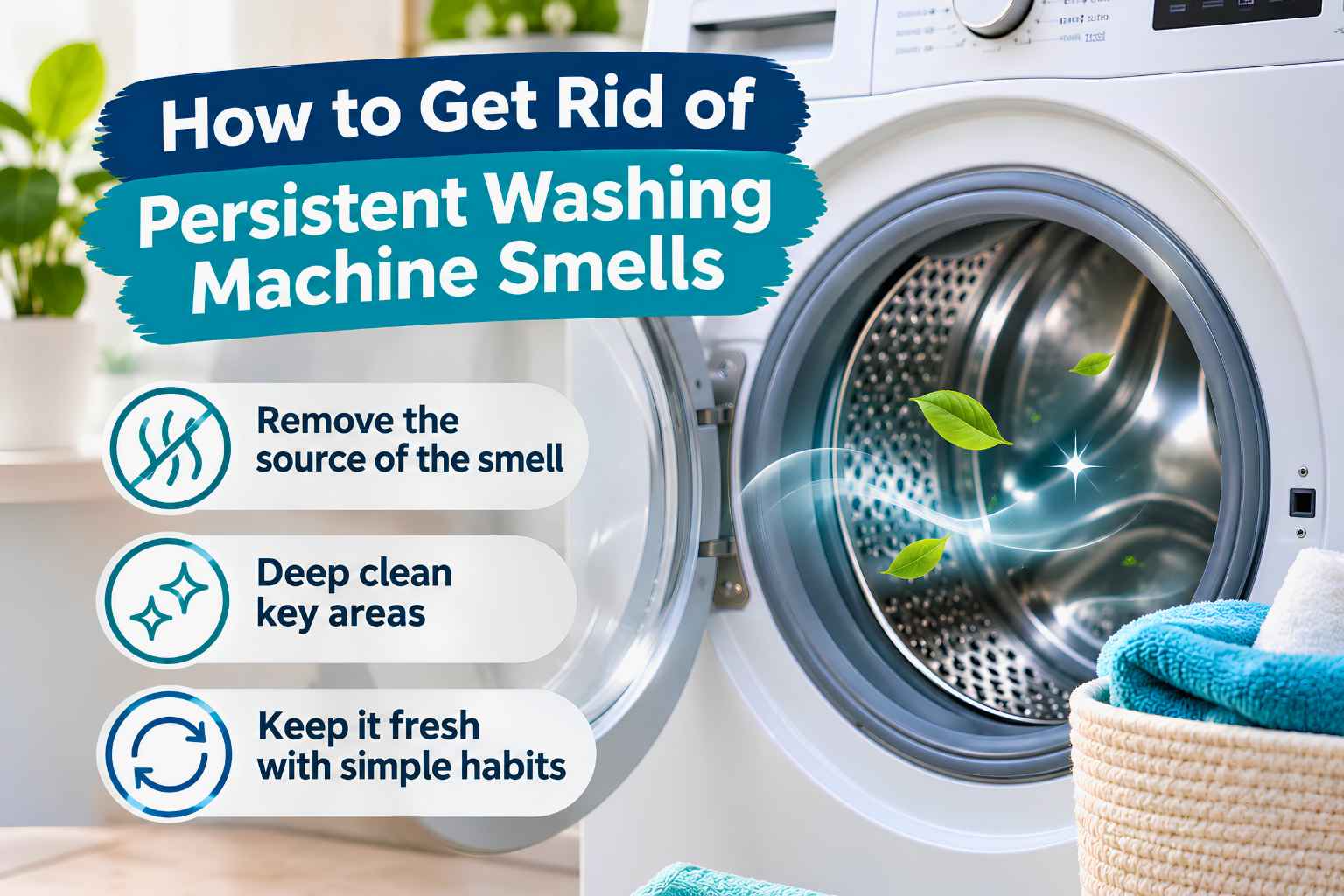
Sometimes, a quick clean is not enough. If the unpleasant smell returns shortly after cleaning, it is worth considering where it originates.
What If the Washing Machine Smells Musty?
A musty smell is often associated with trapped moisture, detergent residue or mould growth.
Start by inspecting the rubber door seal and detergent drawer. Check the folds of the seal for dark spots and remove any visible residue. Clean the accessible components and run a suitable maintenance cycle.
Afterwards, leave the door and detergent drawer open to help the machine dry completely.
If mould keeps returning despite regular cleaning, there may be an underlying moisture or drainage problem that needs further investigation.
What If the Washing Machine Smells Like Rotten Eggs or Sewage?
A sewage-like smell is different from the usual musty odour associated with a dirty washing machine.
Possible causes include:
- A blocked or dirty drain connection
- A problem with the waste pipe
- Incorrectly installed drainage plumbing
- Build-up in the household drainage system
Cleaning the drum and detergent drawer may not resolve this type of smell. Check the drainage connection only if it is safely accessible and contact a qualified plumber if the odour persists.
Why Do Clothes Smell Bad After Washing?
If your clothes smell unpleasant even after a complete wash cycle, the problem may be related to the machine or your laundry routine.
Common causes include:
- An overloaded drum that prevents clothes from being washed and rinsed properly
- Too much detergent or fabric conditioner
- A dirty drum, rubber seal or detergent drawer
- Poor drainage
- Wet laundry left inside the machine for too long
Try cleaning the machine thoroughly, using the correct detergent dosage and removing clothes promptly after each cycle.
If the problem continues, check the washing machine manual for troubleshooting advice or contact an appliance technician.
How Often Should You Clean Your Washing Machine?
The frequency depends on how often you use your machine, the type of laundry you wash and the manufacturer’s recommendations.
The following table provides a general maintenance schedule:
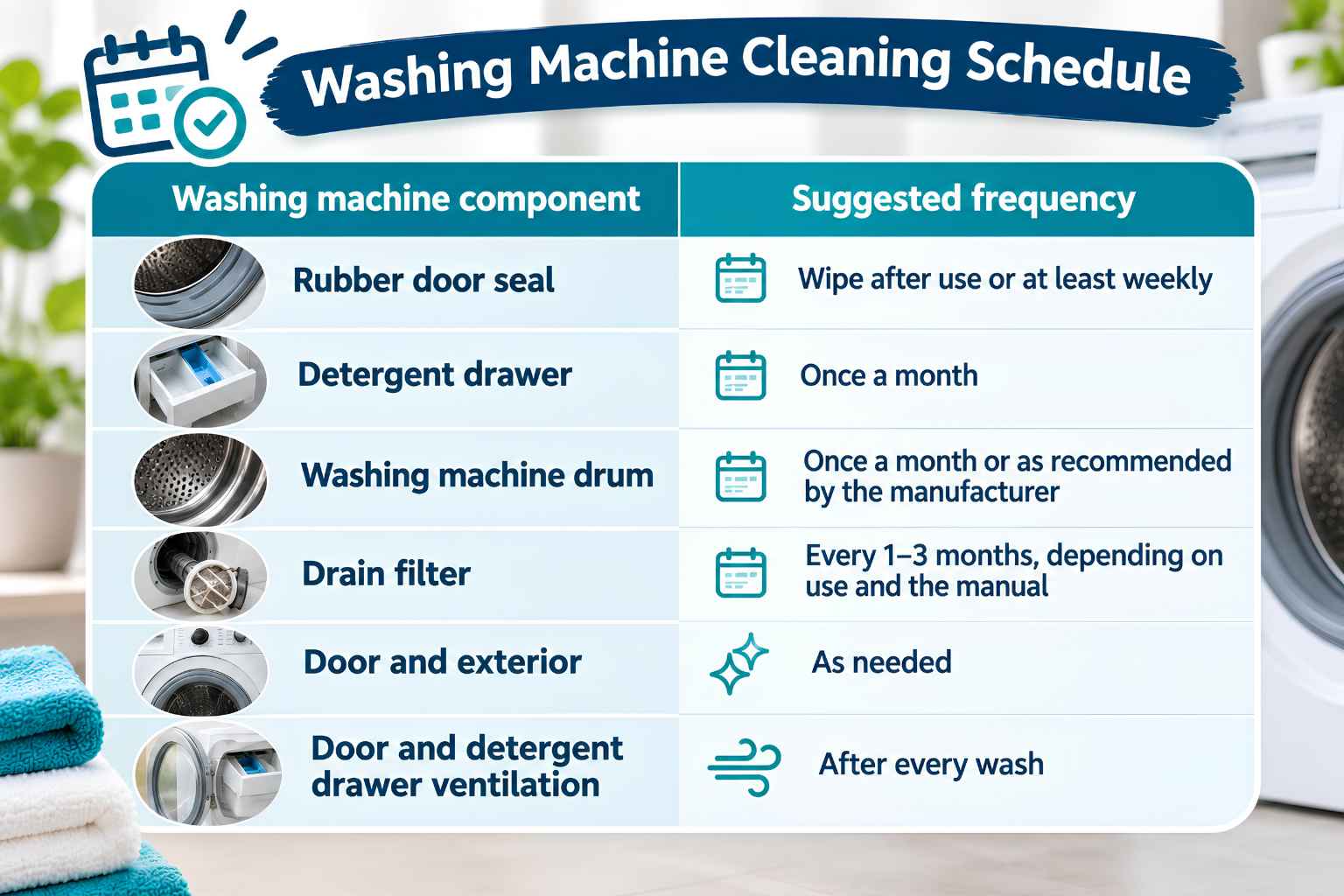
If you have a large household and run several loads every day, you may need to clean certain components more frequently.
How to Prevent Bad Smells from Returning
Once your washing machine is clean, a few simple habits can help keep it fresh for longer.
- Leave the door open after washing. Keeping the door slightly open allows air to circulate and helps moisture evaporate from the drum. Do the same with the detergent drawer where practical.
- Remove wet laundry promptly. Don’t leave damp clothes sitting inside the machine for hours. Transfer them to the tumble dryer or hang them up as soon as the cycle finishes.
- Use the correct amount of detergent. More detergent doesn’t necessarily mean cleaner clothes. Follow the product instructions and adjust the dosage according to the load size and water hardness.
- Avoid overloading the drum. Clothes need enough room to move around so that water and detergent can circulate properly.
- Clean the rubber seal regularly. Wipe away water, lint and visible residue after washing, paying attention to the folds.
- Run a maintenance cycle. Use the machine’s drum-cleaning programme or the cycle recommended by the manufacturer at appropriate intervals.
- Check the filter. Regularly remove accumulated lint and debris to help maintain proper drainage.
These small steps take little time but can make a noticeable difference to the cleanliness and freshness of your washing machine.
When Should You Book a Professional Deep Clean?
Regular washing machine maintenance helps prevent unpleasant smells, but sometimes a more thorough clean is needed, particularly if detergent residue, dirt and grime have accumulated in areas that are difficult to reach.
A professional deep cleaning service can help tackle built-up dirt and neglected areas around your home, including kitchen and utility room surfaces, appliance exteriors and other hard-to-clean spaces. If your washing machine needs attention, check whether cleaning its accessible parts, such as the detergent drawer and rubber seal, can be included in the service.
Consider booking a professional deep clean if:
- The washing machine and surrounding area have accumulated stubborn dirt or detergent residue.
- You struggle to keep the rubber seal and detergent drawer clean.
- You want to give your home a comprehensive clean as part of your regular maintenance routine.
Important: If the washing machine continues to smell after cleaning, drains slowly, leaks or shows signs of a fault, you may need an appliance technician or qualified plumber. A deep cleaning service cannot resolve mechanical or plumbing problems.
Keep Your Washing Machine Fresh with Regular Maintenance
A washing machine doesn’t clean itself, even though it handles laundry every day. Detergent residue, trapped moisture and accumulated debris can gradually affect its freshness and leave unpleasant smells behind.
Cleaning the drum, rubber seal, detergent drawer and filter regularly helps maintain a cleaner appliance and reduces the risk of recurring odours. Combined with simple habits such as removing wet laundry promptly and allowing the drum to dry between washes, these steps can make a real difference.

Leave A Comment